Category Archives: History

Consistency

With the re-blog of Day 42, I decided to go back and start rereading to refresh my memory. I realized that the lab was on different floors of the CDC Special Circumstances building on different days. Quite a feat I’d say, wouldn’t you?

I wonder what other glaring inconsistencies I will find?

Arrrgggggg!!!!!!

Breaking Badfinger

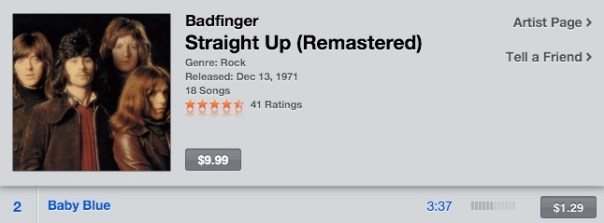
I just finished watching the series conclusion of Breaking Bad. The final song played was Baby Blue by Badfinger, a top hit from 1972 and one of my favorites. At a time when kids named their cars, I named my second car, my second VW bus, Baby Blue.

As the crystal meth Walter White made was a trademark blue, Baby Blue was a fitting song. Actually it is fitting in many ways, on many levels.

Breaking Bad is destined to be a cult classic.

Baby Blue was a cult classic in the 1970s.


Wikipedia has a good discussion of it, including acknowledgement of it’s appearance in Breaking Bad (who updates Wikipedia so fast?)
http://en.wikipedia.org/wiki/Baby_Blue_(Badfinger_song)


Click below to go to iTunes

20130929-214358.jpg


Badfinger recorded on the Apple label, the Beatles label well before Steve Jobs created the other Apple. In fact there is a lot of history on this as well.

Desiderata

If you were old enough to read (or listen to the radio) in the 1970s, you most probably remember the Desiderata. There were several popular recordings of it released to the radio.

Wikipedia has an excellent in depth history of it. http://en.wikipedia.org/wiki/Desiderata

Google images has many examples of illuminated texts.

I got to thinking about it in the context of not being able to afford the Tesla Model S. Strange how the mind works.

The Desiderata should be hung on the kitchen wall where it can be read from time to time. The truths and advice that it contains are as old as humanity and as timeless as the sun and stars.


Desiderata

Go placidly amid the noise and haste,
and remember what peace there may be in silence.
As far as possible without surrender
be on good terms with all persons.
Speak your truth quietly and clearly;
and listen to others,
even the dull and the ignorant;
they too have their story.

Avoid loud and aggressive persons,
they are vexations to the spirit.
If you compare yourself with others,
you may become vain and bitter;
for always there will be greater and lesser persons than yourself.
Enjoy your achievements as well as your plans.

Keep interested in your own career, however humble;
it is a real possession in the changing fortunes of time.
Exercise caution in your business affairs;
for the world is full of trickery.
But let this not blind you to what virtue there is;
many persons strive for high ideals;
and everywhere life is full of heroism.

Be yourself.
Especially, do not feign affection.
Neither be cynical about love;
for in the face of all aridity and disenchantment
it is as perennial as the grass.

Take kindly the counsel of the years,
gracefully surrendering the things of youth.
Nurture strength of spirit to shield you in sudden misfortune.
But do not distress yourself with dark imaginings.
Many fears are born of fatigue and loneliness.
Beyond a wholesome discipline,
be gentle with yourself.

You are a child of the universe,
no less than the trees and the stars;
you have a right to be here.
And whether or not it is clear to you,
no doubt the universe is unfolding as it should.

Therefore be at peace with God,
whatever you conceive Him to be,
and whatever your labors and aspirations,
in the noisy confusion of life keep peace with your soul.

With all its sham, drudgery, and broken dreams,
it is still a beautiful world.
Be cheerful.
Strive to be happy.

Max Ehrmann, Desiderata, Copyright 1952.

Ленин и Союз

Lenin and Soyuz

Found this on YouTube. The climate is warmer, and it is daytime, and crowded, but you will get to see the old school changing of the guard at Lenin’s Tomb, Soviet Style. The guard video is from 1980, not sure when the later footage was shot.

Ленин = Lenin

CCCP = SSSR = USSR

= = =

Below is video about the Apollo-Soyuz Test Project

Союз = Soyuz = Union

Part 1

Part 2

Dancing with the Bears

Author’s note: This post is part of the Welcome to the Future series of essays. If you haven’t read Welcome to the Future, I suggest that you start >> HERE <<

Author’s second note: I wrote the bulk of what you are about to read three to five years ago, when I first decided to start writing. It sat ignored and ‘unloved’ for many years. Time to show it some love…


I’ve learned to hate Russians
All through my whole life
If another war comes
It’s them we must fight
To hate them and fear them
To run and to hide
And accept it all bravely
With God on my side.

Joan Baez (Bob Dylan) – With God On Our Side


Lately it occurs to me what a long, strange trip it’s been.

Grateful Dead – Truckin’


You see, George, you really had a wonderful life.

Frank Capra – It’s a Wonderful Life


Back in the US, back in the US, back in the USSR.
The Beatles – Back in the USSR

December 2, 1989, 11 PM – Red Square, Moscow, USSR

It is snowing lightly and is bitterly cold … even for native Russians. For a native Floridian and naturalized Texan, it is something well beyond cold. My thin fleece-lined yuppie overcoat doesn’t begin to keep me warm, even with an extra sweater underneath.

Heat drains from my feet, through my dress wingtips, into the ice and snow covered brick pavement. I stomp my feet. I can no longer feel my toes. My nose is frozen. My lungs burn with every breath. Despite my gloves, my fingers are numb and I wiggle them in a fruitless attempt to keep the blood circulating in them. My head is topped off with a brand new rabbit fur Shapka that I paid too much for earlier in the day at the hotel gift shop. The Shapka’s flaps are down, covering over my ears. No true Russian wears the flaps down … at least not in Moscow. Did I mention that it’s cold?

I’m standing in Red Square late at night in the Soviet Union. The three story tall State Department Store G.U.M is to my back, draped in giant posters of Lenin. Red Square – Krasnaya Ploshchad – is brilliantly lit by banks of flood lights mounted on the walls and roof of G.U.M.

I am standing where multitudes of marching troops, tanks, and missiles passed reviewing stands filled with the likes of Lenin, Stalin, Khrushchev, Brezhnev, and Gorbachev during the annual Soviet May Day parades. To my left, at the far end of Red Square, Saint Basil’s multicolored onion domes rise like giant shining Faberge eggs. To my right, at the other end of Red Square stands the red brick façade of the State Historical Museum. Directly in front of me, across an open expanse of snow covered pavement, is the black and red tomb of Vladimir Ilyich Lenin nestled against the red brick wall of the Kremlin where the ashes of Yuri Gagarin and other Soviet heroes are interred.

Red and black in front; red, blue, and yellow to the right; red to the left; brilliant white on the ground; and above … black … pitch black – save for the twinkle of falling snow flakes … looking like slow moving stars on the view screen of a starship cruising in warp drive.

= = = = =

I have been fascinated by the Russians since I was a kid. Sure, they were the enemy, the commies, the great totalitarian regime, the Evil Empire. We almost came to nuclear blows in the sixties when Khrushchev tried to put short range missiles in Cuba. I vividly remember the B-52 flying low overhead, taking off from Homestead Air Force Base south of Miami. Smoke poured from its eight screaming jet engines, its landing gear still extended. I was nine years old. My dad and I were taking a drive somewhere. Fishing maybe? My dad loved to fish. Maybe my mom just wanted him to get me out of the house. I don’t know or remember why we were there.

The B-52 filled the sky like some giant dirty silver eagle taking off to look for prey. I remember the sight and sound of it to this day. I loved jets. Dad and I would go to Fort Lauderdale Airport or Miami International Airport, park at the edge of the runway and watch the jets land and take off for hours. It was an innocent time when you could actually park at the end of a runway and watch jets land and take off without raising an alarm with Homeland Security. On our third date I took the future Mrs to Fort Lauderdale Airport to watch the jets. I loved the roar of the engines on take off, the smell of burned jet fuel, the warm blast of the exhaust, and the high-pitched whine of an airliner coming in for a landing.

The Cuban Missile Crisis was a big deal for South Florida. The Mrs tells the story of how she and her dad were driving past Homestead AFB and they pulled into the entrance to turn around. They found themselves staring up the barrel of a tank which was posted in the middle of the road. The tank commander, standing in the turret, yelled at them to state their business or leave. As they turned around on the entrance road, the turret of the tank slowly tracked their movement, ready to open fire on the slightest provocation. Troops were mobilized to Florida and occupied a number of locations. I remember driving past one of the horse race tracks with my dad. From the highway you could see tents, trucks, jeeps, cannons, troops, and other implements of destruction … ready to invade Cuba – just 90 miles away – on a moment’s notice should the orders be given.

I grew up in South Florida, three hour’s drive south of Cape Canaveral. It was the Cold War and the Russians were our adversaries. They beat us into space, launching Sputnik into earth orbit in October of 1957 when I was not quite four years old. Then Sputnik 2 with the dog Laika – nicknamed Muttnik by the American press – followed in November. From 1957 to 1960, the Soviet Union launched numerous Sputniks and other satellites carrying dogs, mice, rats, guinea pigs, and plants. I was much older when I found out that Laika had died in space – as planned – something parents and school teachers weren’t likely to tell small children. Except for launch explosions and failed re-entries, the animals that followed Laika into space returned safely to earth. One of the puppies of Strelka (Sputnik 5, 1960) was even given to young Caroline Kennedy by Nikita Khrushchev. Then in April of 1961, Russian cosmonaut Yuri Gagarin became the first human to orbit the earth. By the time I entered First Grade the Space Race was already running at full speed.

I watched all of the manned space shots on TV – Mercury, Gemini, Apollo, and later missions; watched all of the unmanned lunar and planetary coverage. In the ’60s space flight got almost as much coverage as football or even the Vietnam War. It was all new, every mission a first, every photo a discovery. It was exciting and very, very, cool. I eventually talked my dad into driving up to watch one of the early Apollo launches (Apollo 9 or 10, I think). Later, when I got my driver’s license, I caught as many launches as I could. Titusville, just three hours away from home and eleven miles west of the launch site, turned out to be the perfect spot for watching launches. Even at eleven miles away, the sight and sound of a live Saturn launch was far beyond anything I had seen on TV. I was addicted. I drove up to watch several Apollo launches including the night launch of Apollo 17, the Skylab launch, and the Apollo-Soyuz launch.

The Apollo-Soyuz Test Project (ASTP) was a big deal for space watchers around the world. The United States was in the midst of a Cold War with the Soviet Union, the Berlin wall was still dividing East from West Berlin, and communism was flourishing. Yet the Americans and the Russians had decided that cooperation, in space at least, was in both of their interests. Various overtures had quietly been made throughout the 60s for cooperation in space, but the race to the moon took precedence for both sides. The entire world watched as Neil Armstrong stepped on to the surface of the moon on 20 July 1969. Yet it would be many years before we learned the details of the spectacular launch pad explosions that derailed the Russian moon effort. The end of the space race was the beginning of space cooperation and within six years both sides were able to modify existing designs and coordinate flight plans to allow for the rendezvous and docking of Russian and American spacecraft.

During the summer of ’75 I was home from college. The Apollo-Soyuz launch was scheduled for July, so George and I decided to drive up to see it. I’ve known George since first grade. To say that George and I were best friends would be an understatement – we were “cohorts in crime”. The previous year George had invited me to tag along with him on a private tour of Kennedy Space Center (KSC) sponsored by his CAR (Children of the American Revolution) chapter. We also managed to add the future Mrs, her nursing school roommates, and few other friends to the entourage. Although I had been to KSC many times before on various tours, this was the first time I had been inside the enormous Vehicle Assembly Building (VAB) where the Apollo Saturn Vs (and later the Shuttles) were assembled for launch. One of the four assembly bays held the Saturn IB and Apollo that would be used for Apollo-Soyuz. That area was roped off, but we were otherwise free to wander around inside the cavernous hall and stare gawking up at the massive service cranes on the ceiling fifty stories above. As if to somehow flaunt just how big the VAB was, a fully inflated balloon – looking to be about the size of the Goodyear blimp – was tethered in one corner. In another section was a full scale mockup of the Apollo plus Docking Module on one stand and the Soyuz on another stand. (This model was later moved to the Smithsonian National Air and Space Museum.)

A few days before the Apollo-Soyuz launch, I borrowed the family car and drove up to Titusville with George and Mark. We camped for two days on a small spit of land that jutted out into the Indian River (more bay or lagoon than river) that separates Kennedy Space Center from the mainland. The Kennedy Space Center includes Merritt Island with the VAB and Saturn launch pads and to the southeast – Cape Canaveral. Cape Canaveral was of course the site of all of the early manned and unmanned launches. Launch complexes for various versions and/or series of Atlas, Delta, Juno, Jupiter, Minuteman, Polaris, Poseidon, Redstone, Saturn, Thor, Titan, Snark, Vanguard, and others dotted the coast. For most of my youth I knew it as Cape Kennedy. It was renamed following the assassination of President John F. Kennedy in 1963 and remained Cape Kennedy for a decade until changed back due to pressure from the local residents.

So there we were – the three of us – in July of 1975 camped out on the bank of the Indian River with a few thousand of our closest friends awaiting the launch of the Apollo half of the Apollo-Soyuz mission. Mark had borrowed a small freestanding Coleman dome tent and we took turns sleeping in it or getting out of the sun. In front of us, facing the launch site, the water was shallow enough to wade out a fair distance in only knee-deep water. Horseshoe crabs were everywhere and required care to avoid stepping on. Behind us ran US-1 with its normal load of daily traffic. Although not as crowded as the launches of the sixties, this launch had still drawn a respectable audience. All of the hotels showed “No Vacancy”. Campers, cars, and tents lined the shore. A Shell station on the other side of the highway served as our restroom and commissary. It had a pay-phone which I would use to occasionally call home (cell phones didn’t come into existence until the ’80s and weren’t generally affordable until the ’90s).

I had discovered this spot during preparation for the launch of Apollo 17 two years earlier. We drove up a few weeks prior to the Apollo-Soyuz launch to scout out the site again and take photos of the launch vehicle on the pad. Once the launch date was more or less firmly set, we left a few days early to get a good spot. We were pretty much the only ones there when we got there, but as the scheduled launch day approached, every square inch of real estate became occupied by sightseers. I had taken an assortment of camera gear, telephoto lenses, and tripods in hopes of getting some good launch photos. July in Florida is characteristically hot and humid with occasional afternoon showers. Fortunately for us, the sky remained clear and there was a continuous breeze blowing from the east across the water. Unfortunately for us, the sand spit of our campground was deposited from ultra fine-grained sand which the breeze scattered about. Soon everything – camera gear, binoculars, telescopes, the inside of the tent, the food, every crevice of our bodies – was coated in a fine grit. We were sunburned, wind burned, sweaty, gritty, doused in mosquito repellent, and hadn’t bathed in days – it was great. We stayed up all night, slept at odd hours, talked to the ‘neighbors’ and … waited.

The Saturn IB launch vehicle was only half as tall as the Saturn V moon rocket, but was launched from the Saturn V launch complex on Merritt Island. The Saturn IB was a leftover from the early development days and NASA decided to use it for the last manned mission before the shuttle was to begin flying in six years. The Apollo capsule and Service Module had been built for a moon launch that had been cancelled due to funding cuts. The only new component was the Apollo-Soyuz Docking Module which provided both docking compatibility with the Soyuz and an airlock to allow for equalization between the low pressure pure oxygen environment of Apollo and the slightly higher nitrogen/oxygen atmosphere of Soyuz. It would serve as the “parlor” where the Americans and Russians would meet. The Docking Module was stowed between the Apollo and the Saturn second stage, in same location as that of the lunar landing modules. Once launched, Apollo would separate, spin around, and dock with the Docking Module – forming the complete U.S. half of the Apollo-Soyuz configuration. Rather than undertake the enormous cost of modifying the support gantry to accommodate the shorter Saturn IB, NASA engineers built a platform to support the Saturn IB, lifting it up such that the Apollo capsule was at the correct height to mate with the “clean room” and other connectors at the top. This support platform looked for all the world like an old Bunsen burner stand that we used in chemistry class to hold beakers or flasks over the fire. At a distance it was quite an odd site to see the ‘tiny’ rocket held up by a Bunsen burner stand next to the tall gantry structure.

Tuesday 15 July 1975 – six years minus one day after the historic moon launch of Apollo 11 – the sun rose above the horizon next to the Apollo Saturn launch pad. The sky was clear with no clouds or rain predicted. It was the perfect day for a launch. We had made friends with the retired couple in a nearby camper who had a battery-powered TV and were able to get status updates from both NASA and Russian space agency. Soyuz 19 would launch seven hours ahead of Apollo from the Baikonur Cosmodrome in Kazakhstan. This was the first time ever that an American TV audience was able to view live coverage of a Russian manned space launch. We watched it on that small battery-operated TV, camped eleven miles across the water from the Apollo launch pad. After several more minutes of coverage we returned to our tent, periodically checking the launch pad with binoculars and telescopes and passing the time until the scheduled afternoon launch. The countdown progressed and at 3:50 PM the Saturn carrying the American half of the Apollo-Soyuz mission lifted off the pad. The Saturn IB launch was somewhat less spectacular than the previous Saturn V launches I had seen, but was highly enjoyable none the less … and … we had been there to see the last ever launch of an Apollo spacecraft. After waiting for the other spectators to disperse, we finally drove back home. At home two days later we watched live TV coverage of the historic first meeting of the Americans and Russians in space.

In high school I tried to teach myself Russian from a Berlitz book I found at the local public library. I hung out at the library a lot as a kid. It was close enough to our apartment that I could walk or ride my bike to it. It was air conditioned – an important point for a kid growing up in South Florida – it was free – another important point … and … it was quiet (it was the library). I would sit in the back of the library by the magazine racks in one of the two comfy wing-back leather chairs and read Science News, Scientific American, Consumer Reports, etc. Lots of good stuff to read … and I read a lot. It was also smoke free – a rare thing in the sixties. I lived with my parents and my sister in a two bedroom duplex apartment with a small wall mounted all-in-one air conditioner unit. Mom and dad smoked like chimneys, which was the norm at the time, and the apartment was always thick with smoke. The library was a literally a breath of fresh air.

I would hang out at the library, back in one of the comfy chairs, studying Russian from the Berlitz book. Pronunciation was the hardest part, trying to pronounce words without actually hearing a native speaker say them. Da and Nyet were easy. Spah-cee-ba, pah-zha-lu-ee-sta, zdravst-vu-ee-tee and a host of other words were almost impossible. Years later I would have tapes of Russian conversations that I could listen to over and over again ad nauseum, but in the library I muddled through as best I could.

Star Trek made its appearance in 1966, the year of the final two-man Gemini missions. I was in Junior High. My parents didn’t care much for Star Trek and I always had to beg them to watch it on our one-and-only black and white TV. My dad always made fun of William Shatner’s over-acting, which I didn’t appreciate until years later watching Star Trek reruns. Star Trek was famous for quotes like “Damn it Jim, I’m a doctor, not a [insert profession here]” and “Beam me up Scottie” (even thought this exact phrase was never actually spoken in any of the TV episodes or later movies).

Star Trek also introduced the warp drive, permitting the crew to travel to other star systems faster than the speed of light and allowing them to visit a new star system every week. Although the concept of warp drive wasn’t new to readers of science fiction, Star Trek certainly popularized it and warp drive (or something like it) became the standard means of space transportation for future TV shows and movies including StarWars. As if to foretell the future of spaceflight and US-Russian relations, Star Trek featured a Russian as part of the crew – Ensign Pavel Andreievich Chekhov. Perhaps to mock the fact the Russians had beaten us into space, Chekhov’s stock response for any accomplishment … was that the Russian’s had done it first and done it better.

As a kid I listened mostly to AM radio and, when I could afford them, vinyl records. My dad gave me a hand-me-down HiFi with a record player sometime early in Junior High. This was a not a stereo – it was monaural – one channel. AM radio was also monaural. FM stereo did exist, but it was exclusively devoted to easy listening, classical, and “old folks music” – Sinatra, et. al. All the good music was on AM, and of all the groups playing, it was the Beatles that had the greatest impact on me. When they made their first US appearance on the Ed Sullivan show in February of 1964 the girls went wild. My five year old sister loved them. I however, hated them – “I Want to Hold Your Hand” and “Love Me Do” are not the kind of songs that appeal to an eleven year old science nerd. But as I matured, so did the Beatles. They developed an edge and a depth that spoke to the soul of a teenager searching for meaning in a confusing and troubling world. Within the span of my junior high school years they released the albums Rubber Soul, Revolver, Sgt. Pepper’s Lonely Hearts Club Band, and Magical Mystery Tour – each successive album somehow better and edgier than the previous one. This progression of musical genius culminated with The Beatles – also known as the White Album.

The White Album hit the stores in November of 1968 during my first year of high school and got heavy radio play in the same time period as the Apollo flights leading up to the Apollo 11 moon landing. It was a breakthrough two-album set. I never owned the vinyl, but George did and I would go over to his place and we would listen to it late into the night. Many of the songs spoke directly to me – with a deeper meaning, other songs were just fun to listen to. Still others appealed to me due to the complexity of the instrumentals. “While My Guitar Gently Weeps”, “Happiness Is a Warm Gun”, “Piggies”, “Rocky Raccoon”, “Mother Nature’s Son” (later popularized by John Denver), and “Helter Skelter” were some of my favorites.

But arguably the best song on the White Album was the first song on the first record, which opens with the high-pitched whine of an airliner coming in for a landing … “Back in the USSR”.

= = = = =

This is my very first trip across ‘the pond’ – departing Houston and over-nighting in Frankfurt, then flying on to Moscow. I am part of a small team of geoscientists and negotiators from an oil company scouting a major gas field near the Arctic Circle. After another over-night in Moscow we will board an Aeroflot flight to Western Siberia. Only a few hours ago we arrived at Sheremetyevo airport, cleared customs, arranged for mini-buses to take us and our voluminous luggage to the hotel, checked in, and finally met downstairs for a strategy meeting and dinner in the hotel ‘beer garden’. We are staying at Gostinitsa Mezhdunarodnaya – the International Hotel. The Mezh, as it is affectionately called by foreigners, is one of the newer hotels. It is located on the north bank of a bow of the now frozen Moscow River, across from the older Russian-style Hotel Ukraine. The Mezh is famous for its large ornate lobby clock whose mechanical rooster crows each hour with much fanfare.

Although one of the newer hotels, the Mezh is very much a traditional Russian hotel. After checking in I am given a receipt and a slip of paper with my room number. I take the elevator up to my floor and I find the dezhurnaya or key lady. I hand her the slip of paper and she hands me a key and signs me in. Day or night a key lady is on duty. When I leave I have to turn in my key and get a slip of paper – when I return I hand over my piece of paper and get my key back. Was this a way for the KGB to track my comings and goings? Perhaps, but it might be just as likely that hotels have a limited supply of keys – possibly as a security measure – but more likely than not just a supply shortage like everything else in the Soviet Union. At any rate the ‘powers that be’ will know when I am in my hotel room and when I’m not. Big Brother is watching me.

After a late dinner Peter invites me to go with him to see the changing of the guard at Lenin’s Tomb, which is similar to that of Buckingham Palace, yet distinctive in its own Russky way. Anyone can see the changing of the guard at Buckingham Palace, but how many Westerners get to see the one at Lenin’s Tomb? I’m pretty jet-lagged, but I need to stay up as late as possible to reset my clock – not to mention that we are on a tight schedule and this might be my only chance to see Red Square.

Hell yes, I’ll go!

Our goal is to catch the eleven o’clock changing of the guard at Lenin’s Tomb before Metro stops running at midnight. It’s after ten and Peter isn’t even sure we can make it in time, but he thinks we might be able to make it if we hurry. We head out on foot into the bitter cold. We walk north from the Mezh on an icy walkway along Ulitsa 1905 goda, 1905 street. Peter is in better shape than I am and I can barely keep up with him. We walk a few blocks until we come to a small wooded park on the right lying between Ulitsa 1905 goda and Ulitsa Trekhrodniy Val. Then we follow a crunchy snow-covered path through the park a few more blocks and emerge at the edge of a large empty thoroughfare. We hurry across and walk a few dozen more yards to the circular Ulitsa 1905 goda Metro station. We buy our subway tokens and hop on the escalator descending as if into the bowels of earth. The air is warm and humid now and I need to wipe off my glasses in order to see the steep tunnel opening before us.

The escalator zips us quickly into the depths and we arrive at the platform of the ‘Magenta’ line. Peter, who as been here several trips before, leads us to the correct side heading into Moscow. Almost immediately a train arrives, the doors open, and we hop on. I find a place to stand and grab on to a hand rail. With no time to spare a voice says something in Russian over the loud speakers and away we zoom, accelerating rapidly. Although I have been studying Russian with a tutor at work for perhaps three or four months now, my grasp of spoken Russian is weak, so I have no idea what was said. Peter tells me it is essentially “watch out for the closing doors” followed by the name of the next station. This is probably the standard routine for most subways around the world, but since this is also the first time I have been on a subway, I am very impressed. The lights blink off-on-off-on and a voice comes back on the speakers. I can’t tell if it is live or a recording. Peter tells me this isn’t our stop. The train decelerates and I adjust my stance to maintain balance. The doors open, people get off, people get on, the voice makes another announcement, and away we go again.

The lights blink. The voice speaks. “Time to change lines” Peter informs me. Doors open and out we go. Up stairs – down stairs – cross over – check the signs – more stairs (all of this still deep underground) and then we are on the ‘Green’ line. Once again a train arrives almost immediately and the process repeats. We get on only to get off at the next stop, Teatralnaya, Theater District, from which we can exit to the surface via the Ploshchad Revolyutsii, Revolution Square, station. Back on the escalator – up up up up up up up – and through the glass doors, back out into the cold dry night. The rapid change of temperature takes me by surprise and I have trouble catching my breath. Peter looks at his watch – it is almost eleven – and we still have a good way to go. We hurry helter-skelter over icy streets – walking, sliding, running. Down a dark narrow empty alley, then another alley, then another, past old dark buildings, under high archways. Out on to a major street, up a slight hill … then suddenly wide open space … Red Square, snow-covered, brightly lit, surreal. More snow crunches under foot as we run across Red Square to the mausoleum on the other side. Lungs burning. Eyes squinting in the blinding light. The black and red polished granite of the tomb stands against the red brick of the Kremlin wall. Engraved in red within the black granite band encircling the tomb is one word in the Russian Cyrillic alphabet

Ленин.

Two soldiers are standing guard in front of the entrance to the tomb, motionless as if frozen solid in the frigid Russian night. Are these the new guards? Did we miss the change? We watch … waiting expectantly. A light snow begins to fall, imparting a surreal feeling that we are mere figurines standing in a Faberge snow globe.

Suddenly as if on cue two new soldiers appear from the far right marching along the Kremlin wall. Steam wafts from their mouths and noses as they march toward us, turn, and then approach the tomb. With intricate precision, the new guards exchange places with their comrades and take up their positions in rigid silence. The two relieved soldiers then march back along the red brick of the Kremlin wall and disappear from view as the thump thump thump of their boots on the frozen pavement trails away into the night. The only ones remaining on Red Square are Peter, myself, and the two new guards. My lungs are burning, fingers and toes numb, eyes and nose watering, but I had made it in time to see a hallmark of the Soviet Union – the changing of the guard at Lenin’s tomb. Little did I know that within a year the Soviet Union would collapse and the honor guard at Lenin’s tomb would be a footnote in history.

Falling snow flakes twinkle in the bright lights as we take one last look at Krasnaya Ploshchad before turning to leave and making our way back to catch the last Metro run of the night.
21st Century I.P.

RANT

Hey Googstapos … To paraphrase Arlo Guthrie, “You’ve got at lot of damn gall to come after folks who include copyrighted music in their YouTube videos when you collect and store FOREVER every damn bit of personal information you can about us to be used against us to try to sell us crap we don’t need!”

OK … That about sums up the rest of this post. This is an incoherent rant. Deal with it.

Weggieboy’s comments on my JOSIV5 post hit a nerve.

Now I am not a lawyer and I don’t even play one on TV, so I have no legal insight here. But consider the following: let’s say

    I invite you to my house to listen to my LP record of C. W. McCall’s Convoy
    I invite you to my house to listen to my 8-track of C. W. McCall’s Convoy
    I invite you to my house to listen to my Compact Cassette of C. W. McCall’s Convoy
    I invite you to my house to listen to my CD of C. W. McCall’s Convoy
    I invite you to my house to listen to my self-ripped digital copy of C. W. McCall’s Convoy
    I invite you to my house to listen to my iTunes Match digital C. W. McCall’s Convoy
    I invite you to a local coffee shop and play C. W. McCall’s Convoy for you on my iPhone
    I come to your house and play C. W. McCall’s Convoy for you on my iPhone
    I upload C. W. McCall’s Convoy to YouTube and send you the link to listen to it
    I find someone else’s YouTube posting of C. W. McCall’s Convoy and send you the link
    I give you a digital copy of C. W. McCall’s Convoy
    I sell you a digital copy of C. W. McCall’s Convoy

Oh and somewhere in there is “I go to a local coffee shop and play C. W. McCall’s Convoy loud enough that everyone can hear it.”

Do you see where this is going?

Let’s try to separate “ethical” from “legal”. “Ethical” is doing the right thing. “Legal” is some arbitrary construct decided upon by lawyers and the courts, often in favor of big business and the rich. I say the rich, because the poor and middle class have neither the time nor the money to hire the lawyers to write the laws.

Ethical is paying artists for their work. Legal is making sure that the corporate entities who bought the rights to the music get every penny possible in order to pay large CEO salaries and lawyers to ensure they get every possible penny.

Ethical is not selling something that is not yours to sell. Legal is making sure that no one has access to art, music, information, or technology without paying for it. (How do libraries even exist anymore?)

So back to my scenario of C. W. McCall’s Convoy above. At what point does it stop being Ethical? Selling you a digital copy sounds unethical to me. Giving it to you … possibly. Letting you listen to it? I would argue that every scenario where I let you listen to it, whether at my home, or at the coffee shop, or via a link on the Internet is ethical. Implicit in this is that if you like it and want to listen to it again … you go buy it. (Thus my links to Amazon and iTunes for C. W. McCall’s Greatest Hits). Just ask yourself “What’s the right thing to do? How would I like to be treated? Think of the Golden Rule.

Legal is an entirely different answer. Selling a digital copy? Illegal. Giving a digital copy? Illegal. Posting online via YouTube for one-time use? Illegal. Uploading for download and unlimited use? Illegal. Play in public for others to hear? Illegal. (It is illegal to even sing Happy Birthday in public without paying royalties). Playing for a friend to listen to while in the physical presence of your friend? (lawyers: is there a way we can get him to pay to listen? No? Whaaaa) OK Legal

Ethical – everyone knows what feels right. Just ask the question “Is this fair? How would I like to be treated?”
Legal – you don’t know what is legal without access to the law or statute, the legal opinions handed down by the courts, or a lawyer to explain it to you. Two different lawyers might give two different interpretations.

Ethical is about fair.
Legal is about greed.

Now hold on a minute … You say “We need laws, otherwise people could just do whatever the wanted.” True. But how many laws are at the end of the day all about the Benjamins. ($$$)

Sharing is a fundamentally socialist construct. You can’t make money when people share things. That is the problem with the Internet. Is was designed at its very core to be collaborative, to share. Hence the ability of hyperlinks to jump all over the web. The ease of embedding images and videos from other sites. It was never about making money. You will notice that there are no ads on my site. I am not making any money off of this site. My links to iTunes and Amazon were “doing the right thing” … if you like the music, buy it “here”. Rest assured when (if) I finally have a book to sell, I will direct you to a site that will accept your hard earned currency in exchange for my product, but until then just do the right thing.

Copyright Law

The idea of Copyright Law was an attempt to assure one had the ability to profit from one’s work for a period of time before it transferred to the Public Domain. There was a fixed period of time. Now it seems that copyrights are bought and sold, renewed, long out-living their original owners. Multinational corporations now hold the copyright to books, music, movies in perpetuity. They never go into the public domain. At least it seems that way. Ethical is making sure a musician is paid for his music while he/she is alive. Legal is making sure that the corporate entity that bought the rights from the musician or his/her estate continues to make money from it as long as (legally) possible.

Patent Law

Same thing with Patent Law. At one time patents were only granted to things, actual working prototypes of machines. Now any concept no matter how general or far-fetched can be patented. And it is in the best interest of the patent applicant to patent as many variations as possible to keep another person from patenting the invention out from under him and then suing or threatening to sue once the item is in production.

Even so most patent cases either end up in court or patent trolls end up extorting money from manufacturers who can not afford to go to court. Once in court, the rulings are either completely arbitrary, or determined by the skill of the winning legal team.

Oh well, it’s late. I’m tired. I’ve blown off steam. There is so more more to vent about on this subject, but not now. Respond if you wish.

cb

The Silverton

[Author’s note: This post is a continuation of the Welcome to the Future series of essays. If you haven’t read Welcome to the Future, I suggest that you start >> HERE <<]

The Silverton

It all comes down to this. This is my third and final installment on the music of C. W. McCall. The first was Convoy.

The Silverton has been called C. W. McCall’s best song. It sings tribute to the Durango and Silverton Narrow Gauge Railroad. The kids loved to listen to this song when they were growing up. This is the Silverton Train that we sent my wife’s parents over Wolf Creek Pass to get too. Sadly, my wife and I never got to see it (or ride on it) in person.

Thankfully this is the same version we have (and you can have from iTunes or Amazon).

And now without further ado … The Silverton


Subtly different version + different footage

 
The Silverton Lyrics from
http://www.cw-mccall.com/works/black_bear_road/silverton.html


She was born one mornin’ on a San Juan summer
Back in eighteen and eighty and one
She was a beautiful daughter of the D and R G
And she weighed about a thousand ton

Well, it’s a-forty-five mile through the Animas canyon
So they set her on the narra gauge
She drank a whole lot a’ water
And she ate a lot of coal
And they called her the Silverton (Silverton train)

[Chorus]
Here comes the Silverton, up from Durango
Here comes the Silverton, a-shovelin’ coal
Here comes the Silverton, up from the canyon
See the smoke and hear the whistle blow

Well, now listen to the whistle in the Rock Wood cut
On the high line to Silverton town
And you’re gonna get a shiver
When you check out the river
Which is four hundred feet straight down

Take on some water at the Needleton tank
And then a-struggle up a two-five grade
And by the time you get your hide
Past the Snowshed slide
You’ve had a ride on the Silverton (Silverton train)

[Chorus]
Here comes the Silverton, up from Durango
Here comes the Silverton, a-shovelin’ coal
Here comes the Silverton, up from the canyon
See the smoke and hear the whistle blow

[Musical interlude here. Nice violins, and the kettle drums boom well.]

[Chorus]
Here comes the Silverton, up from Durango
Here comes the Silverton, a-shovelin’ coal
Here comes the Silverton, up from the canyon
See the smoke and hear the whistle blow

[If the next line seems a bit familiar, you’re correct. Chug-chug, toot-toot, off we go.]

Now, down by the station, early in the mornin’
There’s a whole lot a’ people in line
And they all got a ticket
On The Train To Yesterday
And it’s a-gonna leave on time

Well, it’s a forty-five mile up the Animas canyon
So they run her on the narra gauge
She takes a whole lot a’ water
And she needs a lot of coal
And they call her the Silverton (Silverton train)

[Chorus]
Here comes the Silverton, up from Durango
Here comes the Silverton, a-shovelin’ coal
Here comes the Silverton, up from the canyon
See the smoke and hear the whistle blow
[Fade out]
Here comes the Silverton, up from Durango
Here comes the Silverton, a-shovelin’ coal
Here comes the Silverton, up from the canyon
See the smoke and hear the whistle blow

Here comes the Silverton, up from Durango
Here comes the Silverton, a-shovelin’ coal
Here comes the Silverton, up from the canyon
See the smoke and hear the whistle blow


And now without further adieu …

Be seeing you …

Convoy

[Author’s note: This post is a continuation of the Welcome to the Future series of essays. If you haven’t read Welcome to the Future, I suggest that you start >> HERE <<]

This essay is both historical for it’s content and futuristic, based on the ease with which one can now learn about C. W. McCall and access his music. Enjoy …

From Welcome to the Future
No smart phones, no cell phones, no satellite phones, no pagers, no texting, no answering machines; only land-line phones at home and if you needed to make a call away from home there were coin-operated “pay phones”.

The above was still true in 1975 when Convoy first debuted. I was in my second year of “real college” in Colorado, my time at Junior College (or Community College as it came to be called) barely counts. OK not strictly true, I met my wife-to-be in Junior College while attending a fencing class. She was my partner during field camp for the “barbed-wire stretching” section. We had five miles of barbed-wire to stretch along a section of canal that bordered the Everglades. She cut her hand and I cleaned and bandaged it tenderly with love and care. So gentle were my attentions that she soon fell under the spell of my gentle but manly manner and soon we were lying under the shade of a mangrove tree making sweet, sweet …

Oh wait that was last night’s dream … It was fencing class as in touché, sabers, etc. …

My wife-to-be in fencing class:

20130831-171620.jpg
Ok not my wife … and besides in 1973 the world had not yet been introduced to light-sabers. We used foils, épées, old-school sabers. Her sweet smile and school girl laugh pierced my heart as did the unshielded tip of her épée. When I finally got out of the hospital … OK that was lie. It was fencing class nothing more. But it was the beginning of a 40 year love affair.


I digress. Where was I? No cell phones. But there was a thing called Citizens Band radio or CB for short (coincidence? … I don’t think so). CB radio became popular with over-the-road truckers as a way to communicate between themselves. In a time without cell phones it became the dominant mobile communications venue for America’s truckers.

Also in 1974, the U. S. national speed limit was reduced to 55 miles per hour, in part due to the Arab Oil Embargo and the need to conserve fuel. America’s truckers who had been used to Interstate Highway speed of 75 mph or in states like Wyoming and Montana no posted speed limit at all, rebelled. Time is money and the reduced speed greatly increased the time it took to get goods across America. They embraced the CB radio as a way to stay in touch and keep an eye out for “Smokey“, the endearing name for state highway patrol officers. So named because they frequently wore hats that made them look like Smokey the Bear (“Only you can prevent forest fires”).

20130831-154225.jpg


CB radio was the cell phone of it’s day for truckers and was embraced by many car owners as well. The truckers developed there own jargon, slang, or lingo for talking on CB. The term handle, meaning the alias or name you went by, originated (or at least became popularized) with CB radio a decade or more before online accounts, chat rooms, and blogs.
C. W. McCall merely popularized the current CB language and phenomenon. There were in fact other CB related songs on the air at the time, but they have all faded to obscurity. Only C. W. McCall and Convoy have survived the test of time (at least as long as I have any say in it).

C. W. McCall

Excerpted from http://www.cw-mccall.com/legend/

C.W. McCall is not a real person. “C.W. McCall” isn’t the name of the group that recorded the music. C.W. McCall is the nom de chanteur of Bill Fries, an advertising man who created the character of C.W. McCall.

In 1972, while working for the Omaha advertising firm of Bozell & Jacobs, Bill Fries created a television campaign for the Old Home Bread brand of the Metz Baking Company. The advertisements told of the adventures of truck driver C.W. McCall, his dog Sloan, and of the truck stop that McCall frequented, The Old Home Café. Bill based the character and his environment on his own upbringing in western Iowa. The commercials were very successful. So successful, that the Des Moines Register published the air times of the commercials in the daily television listings.

From those commercials came the first of the C.W. McCall songs, named after the restaurant: “Old Home Fill-er Up An’ Keep On A-Truckin’ Café”. While Bill provided the lyrics to the song and the voice of C.W. McCall, his collaborator Chip Davis wrote the music. Soon C.W.’s first album, Wolf Creek Pass, was released; its title song was a misadventure of a truck with brake failure.

C.W. McCall’s popularity reached its peak in January 1976, when “Convoy” — from his second album, Black Bear Road — reached the number one position on both the pop and country charts of Billboard.

See also http://en.wikipedia.org/wiki/C._W._McCall

 
I was attending college in Colorado when Convoy became a national sensation. I would like to be able to share the exact version of the song that the Mrs has on her playlist, but it appears that YouTube has scrubbed the audio from all of the videos containing the original recording.

If you remember the original and want to relive your own history you can get it from iTunes by clicking on the image below.

20130831-020551.jpg

Besides Convoy, there are all of his other hits including Wolf Creek Pass, The Silverton (Train), Old Home Fill-er Up An’ Keep On A-Truckin’ Café, and many others. In addition to their historical significance, these are just plain fun songs with entertaining lyrics and great guitar licks and banjo pickin’.

C. W. McCall is definitely Cat-Beard tested and Momma approved.

If you aren’t an iTunes fan you can also get it from Amazon by clicking below:

20130831-020921.jpg

For a trip down memory lane or to listen for the first time, I offer for your consideration …

A VH-1 historical perspective

 
A “live” version of the original 1975 Convoy

 
A raunchier version from the 1978 movie (not my favorite)


Next >> Wolf Creek Pass

 
1975 Lyrics from http://www.cw-mccall.com/works/black_bear_road/convoy.html

[On the CB]
Ah, breaker one-nine, this here’s the Rubber Duck. You gotta copy on me, Pig Pen, c’mon? Ah, yeah, 10-4, Pig Pen, fer shure, fer shure. By golly, it’s clean clear to Flag Town, c’mon. Yeah, that’s a big 10-4 there, Pig Pen, yeah, we definitely got the front door, good buddy. Mercy sakes alive, looks like we got us a convoy…

Was the dark of the moon on the sixth of June
In a Kenworth pullin’ logs
Cab-over Pete with a reefer on
And a Jimmy haulin’ hogs
We is headin’ for bear on I-one-oh
’Bout a mile outta Shaky Town
I says, “Pig Pen, this here’s the Rubber Duck.
“And I’m about to put the hammer down.”

[Chorus]
’Cause we got a little convoy
Rockin’ through the night.
Yeah, we got a little convoy,
Ain’t she a beautiful sight?
Come on and join our convoy
Ain’t nothin’ gonna get in our way.
We gonna roll this truckin’ convoy
’Cross the U-S-A.
Convoy!
[On the CB]
Ah, breaker, Pig Pen, this here’s the Duck. And, you wanna back off them hogs? Yeah, 10-4, ’bout five mile or so. Ten, roger. Them hogs is gettin’ in-tense up here.

By the time we got into Tulsa Town,
We had eighty-five trucks in all.
But they’s a roadblock up on the cloverleaf,
And them bears was wall-to-wall.
Yeah, them smokies is thick as bugs on a bumper;
They even had a bear in the air!
I says, “Callin’ all trucks, this here’s the Duck.
“We about to go a-huntin’ bear.”

[Chorus]
’Cause we got a great big convoy
Rockin’ through the night.
Yeah, we got a great big convoy,
Ain’t she a beautiful sight?
Come on and join our convoy
Ain’t nothin’ gonna get in our way.
We gonna roll this truckin’ convoy
’Cross the U-S-A.
Convoy!
[On the CB]
Ah, you wanna give me a 10-9 on that, Pig Pen? Negatory, Pig Pen; you’re still too close. Yeah, them hogs is startin’ to close up my sinuses. Mercy sakes, you better back off another ten.

Well, we rolled up Interstate 44
Like a rocket sled on rails.
We tore up all of our swindle sheets,
And left ’em settin’ on the scales.
By the time we hit that Chi-town,
Them bears was a-gettin’ smart:
They’d brought up some reinforcements
From the Illinoise National Guard.
There’s armored cars, and tanks, and jeeps,
And rigs of ev’ry size.
Yeah, them chicken coops was full’a bears
And choppers filled the skies.
Well, we shot the line and we went for broke
With a thousand screamin’ trucks
An’ eleven long-haired Friends a’ Jesus
In a chartreuse micra-bus.
[On the CB]
Ah, Rubber Duck to Sodbuster, come over. Yeah, 10-4, Sodbuster? Lissen, you wanna put that micra-bus right behind that suicide jockey? Yeah, he’s haulin’ dynamite, and he needs all the help he can get.

Well, we laid a strip for the Jersey shore
And prepared to cross the line
I could see the bridge was lined with bears
But I didn’t have a dog-goned dime.
I says, “Pig Pen, this here’s the Rubber Duck.
“We just ain’t a-gonna pay no toll.”
So we crashed the gate doing ninety-eight
I says “Let them truckers roll, 10-4.”

[Chorus]
’Cause we got a mighty convoy
Rockin’ through the night.
Yeah, we got a mighty convoy,
Ain’t she a beautiful sight?
Come on and join our convoy
Ain’t nothin’ gonna get in our way.
We gonna roll this truckin’ convoy
’Cross the U-S-A.

Convoy! Ah, 10-4, Pig Pen, what’s your twenty?
Convoy! Omaha? Well, they oughta know what to do with them hogs out there fer shure. Well, mercy
Convoy! sakes, good buddy, we gonna back on outta here, so keep the bugs off your glass and the bears off your…
Convoy! tail. We’ll catch you on the flip-flop. This here’s the Rubber Duck on the side.
Convoy! We gone. ’Bye,’bye.

René Descartes

René Descartes, the brilliant seventeenth century French mathematician, philosopher, and writer is perhaps best known for the famous Latin quotation “Cogito ergo sum” – I think, therefore I am. He was also known for his extremely bad temper and complete lack of patience.

While he was teaching at Universiteit Utrecht in the Netherlands it was customary then as now to have Friday afternoon seminars where professors at the all-male university would lecture to students and faculty alike.

Because it was Friday afternoon and because many members of the faculty were anxious to get an early start on the evenings activities, they would frequently bring along their girl friends, mistresses, or – as was often the case – courtesans (that is, “ladies of the evening”).

One particular Friday the number of courtesans in attendance was quite obviously more than normal. This was of course the very Friday that Descartes was to lecture on the subject of social propriety and marital fidelity.

Descartes as usual was late to the lecture, and being bored, the audience began to do what amorous couples have done for ages. Descartes finally arrived by way of the stage door and ascended to the podium. As he began his lecture, he looked out across the audience only to observe students, faculty, and courtesans locked in the throws of passion (or at least as much passion as one could reasonably have in public).

Descartes loudly cleared his throat in a vain attempt to regain the attention of the audience, but to no avail. Soon Descartes lost all composure and flew into a blind rage. He began screaming at the audience – alternating between his native French and Latin. He began throwing chairs from the stage into the audience. A riot ensued. Many of the attendees were injured and had to be taken to hospital. The police eventually had to be called in.


The moral of the story …


Never put Descartes before the whores.


René Descartes

René Descartes, the brilliant seventeenth century French mathematician, philosopher, and writer is perhaps best known for the famous Latin quotation “Cogito ergo sum” – I think, therefore I am. He was also known for his extremely bad temper and complete lack of patience.

While he was teaching at Universiteit Utrecht in the Netherlands it was customary then as now to have Friday afternoon seminars where professors at the all-male university would lecture to students and faculty alike.

Because it was Friday afternoon and because many members of the faculty were anxious to get an early start on the evenings activities, they would frequently bring along their girl friends, mistresses, or – as was often the case – courtesans (that is, “ladies of the evening”).

One particular Friday the number of courtesans in attendance was quite obviously more than normal. This was of course the very Friday that Descartes was to lecture on the subject of social propriety and marital fidelity.

Descartes as usual was late to the lecture, and being bored, the audience began to do what amorous couples have done for ages. Descartes finally arrived by way of the stage door and ascended to the podium. As he began his lecture, he looked out across the audience only to observe students, faculty, and courtesans locked in the throws of passion (or at least as much passion as one could reasonably have in public).

Descartes loudly cleared his throat in a vain attempt to regain the attention of the audience, but to no avail. Soon Descartes lost all composure and flew into a blind rage. He began screaming at the audience – alternating between his native French and Latin. He began throwing chairs from the stage into the audience. A riot ensued. Many of the attendees were injured and had to be taken to hospital. The police eventually had to be called in.


The moral of the story …


Never put Descartes before the whores.


I Have A Dream

[Author’s note: This post is a continuation of the Welcome to the Future series of essays. If you haven’t read Welcome to the Future, I suggest that you start >> HERE <<]

Excerpted from Welcome to the Future

Negrophobia
I was a lower-middle income white kid of Norwegian-Italian parents. I lived a sheltered, segregated life with white neighbors and white classmates. I am not sure how it happened – my parents, if alive today, would vehemently deny they were racist – but I developed a fear of black people, Negrophobia. I never knew any black people personally as a kid. All I knew about them was what I saw and heard on the news. Black people were angry. Very angry. They were angry at white people. They were angry at my mom and dad. They were angry at me!

 
1963

The sixties were turbulent times. Anyone interested in learning more, will find a wealth of information on the Internet. I won’t begin to try to elaborate on it here, beyond a few simple points. First that the American Negro, the Blacks, the African Americans were righteously angry at being treated as less than human, both socially and economically. Second that my enlightenment regarding the truth began with my leaving home for college and has continued to this day.

Racism is a terrible thing. That seems like such an obvious statement now. Yet as I was growing up, the United States was in the throws of coming to grips with state sponsored racism. One hundred years after the Emancipation Proclamation that led to the abolition of slavery as a legal institution, the American Negro was still socially and economically enslaved.

One of the great leaders of the American Civil Rights Movement was the Reverend Martin Luther King Jr. One of his most memorable speeches was given during the 1963 March on Washington, 50 years ago on August 28.

I have a dream that my four little children will one day live in a nation where they will not be judged by the color of their skin but by the content of their character.

I have a dream that one day … little black boys and black girls will be able to join hands with little white boys and white girls as sisters and brothers.

Watch the full speech below:

Another part of my enlightenment regarding the Civil Rights movement was listening to folk music, Pete Seeger, in particular. Even now as I research this essay, I am learning so much more than I had known before. (The Internet truly is magical) Pete Seeger popularized We Shall Overcome and it became the anthem of the American Civil Rights movement.

Pete Seeger talks about the history of We Shall Overcome:

This is the famous Carnegie Hall recording by Pete Seeger. It is part of the Mrs’ favorites playlist that she has been listening to on her new Bose speaker:

We Shall Overcome – The Complete Carnegie Hall Collection is available on iTunes, Amazon, and most of the usual places. Cat-Beard highly recommends this and the Mrs absolutely approves.

Where was I? Ah yes, the more you know about a person or people the harder it to harbor unfounded fear. The more I learned about the history and circumstances of African Americans the more I was filled with the same righteous anger and sense of brotherhood. How could I fear someone I respected?

 
Color Blind

In the same way that my Dad made sure that I would never be afraid of thunderstorms, the Mrs and I did our best to raise our two sons to be color blind. To our joy and pride, it worked. Both my sons introduced me to Rap (or is it Hip Hop? sadly I’m not hip enough to know the difference). My collection includes, but is not limited to, in no particular order: Jay-Z, Ludadcris, Lil John (Yay-ya), Chamillionaire, Trick Daddy, and Everlast (yeah, OK, so he’s not Black). I find both the rhythm and the lyrics of Rap compelling even if the language is a bit rough. I will never truly understand what it is like to grow up as an African American now or in the 50s and 60s, but through music I have a glimpse into the soul (pun intended) of the Black experience.

 
2008

From a woman on a bus
To a man with a dream

Chorus:
Hey, wake up Martin Luther
Welcome to the future
Hey, glory, glory, hallelujah
Welcome to the future

Brad Paisley – Welcome to the Future

What makes me the most proud about the Presidency of Barack Obama, is not Barack Obama himself. What makes me the most proud is that White America elected him, not once – but twice. I’m sure that the vast majority of Black America voted for him, but that alone would not have won him the Presidency. Barack Obama was elected by White voters.

One of the things I am conscientiously avoiding in this blog is pontificating on matters of politics and religion. Although it is true that I have strong positive feelings toward President Obama, this post isn’t about Barack Obama. This post is about how far we have come as a nation and as a people to have elected a Black man to the White House. In 1963 this would certainly have been a far distant dream.

Hey, wake up Martin Luther
Welcome to the future
Hey, glory, glory, hallelujah
Welcome to the future

 
2013

So here we are fifty years after Martin Luther’s I Have A Dream speech. Are things different? Unquestionably. Are things better? Depends on who you ask, but I would argue that race relations in America are better that they were fifty years ago.

Do White people still suffer from Negrophobia? Sadly, yes. Recent events in Florida testify to this. Frightened people do irrational things. Are there still too many arrests for DWB? I think Jay-Z would say yes. Are too many African Americans in prison for possessing drugs that are now legal in some states? You decide.

As a nation and as a people we still have a long way to go, but I remain optimistic. As for myself, I regret that I don’t have any close Black friends. I have African American, African Trinidadian, and African African friends at work, but no one I socialize with outside of work. Then again I don’t socialize much outside of work. I have a few close friends that I see outside of work, but I really don’t have much free time after work and what little free time I have tend to guard jealously. It must be the Introvert in me 🙂

 
Next >> Convoy

2001

I started this essay a while ago, but I never finished it.
If you haven’t read Welcome to the Future, I suggest that you start >> HERE <<

Excerpted from Welcome to the Future

In 1968, a year before Neil and Buzz first frolicked on the Moon, Metro-Goldwyn-Mayer released Stanley Kubrick’s epic 2001 A Space Odyssey. I begged and pleaded with my dad to take me to the Miami showing which debuted in 70mm ultra-widescreen Cinerama – the IMAX of its day. The 142 minute long movie was unique in its realistic depiction of space flight, with ground breaking special effects and a powerful musical score. It was equally unique in its use of long periods of silence to portray the vast distances and length of time required to travel to Jupiter. The original showing even had an intermission. 2001 opened to mixed reviews. My dad and I mirrored the critical and public sentiment. He thought it was long and boring. I thought – and still do – that it was the greatest science-fiction movie ever made. If you have seen 2001 A Space Odyssey you know what I am talking about, if not Wikipedia, the Internet Movie Database, and numerous fan sites do a much better job of describing it than I ever could. If you like science-fiction and have never seen 2001 you really owe it to yourself to see this film.

20130819-175501.jpg

20130819-175642.jpg

20130819-175754.jpg

Recall that in the ’60s and ’70s there was no such thing as VHS tapes, DVDs, or digital downloads. If you wanted to see a movie you either went to the theater to see it, or hoped it would be shown – cut and commercial-filled – on TV. Fortunately 2001 enjoyed frequent returns to theaters after its 1968 release, albeit in 35mm format on a much smaller screen. It enjoyed a cult following in part due to the spectacular light show at the end of the movie. I saw 2001 A Space Odyssey every time it came back to the theater, often multiple days in a row, often multiple showings in a row. I lost count of the number of times I had seen it after my twenty-second viewing. My dream was to someday be rich enough to have my own home theater and a film copy of 2001 that I could watch whenever I wanted.

2001 A Space Odyssey depicted the video phone, video tablets, and the quintessential sentient computer, HAL 9000. The technology may not have existed yet when I was a kid, but the ideas did and I wanted all of it. I dreamed of video phones and personal communicators. I dreamed of having my own computer that could answer any question I posed of it. I dreamed of the future.
2001

Despite the Y2K (year two thousand) “panic”, the new millennium did not actually begin until January 1, 2001. That is because there was no year zero. The current calendar starts with year 1 A.D. (alternatively C.E.). Thus 2001 marked the beginning of the new millennium. This is why Kubrick and Clark chose the name 2001 A Space Odyssey.

As a teenager in 1968, I envisioned the year 2001 to be the dawn of a fantastic new world. In 1968 the world of 2001 was thirty-three unimaginable and somewhat frightening years in the future. Who would I be in 2001? Where would I live? What would I do? Would I be married? Would I have children? Would I be alive? What would the world be like? Would we have permanent settlements on the Moon? Would humanity even be alive?

If you could have somehow teleported my teenage self from 1968 to 2001 (perhaps via a souped-up DeLorean), I would have been amazed at how much had changed. Yet I would have been even more amazed at how little had changed. Listen to the Merry Minuet by the Kingston Trio, circa 1959:

First notice how little has changed since 1959. Second despite the dark humor, please realize that fear of nuclear annihilation was ever present throughout my teenage years. I personally think that global nuclear annihilation is less likely now than it was fifty or so years ago, but I am less optimistic regarding localized nuclear engagements or terrorist attacks. I actually think that although our fears have subsided, the real danger may have increased.

I plan to address Negrophobia and U. S. race relations more in a later post, but I think it is safe to say that much has changed both in the U. S. and around the world since the 1960s. For some folks, things are better, for others maybe not so much. Still I remain hopeful and optimistic. Much more to say in future …

Epiphany

I’d have given anything to have my own PacMan game at home.
I used to have to get a ride down to the arcade. Now I’ve got it on my phone.

Brad Paisley, “Welcome to the Future”

A month or two ago I had an epiphany while driving into work (possibly listening to some obscure “teenhood” song playing on my iPad streaming via Bluetooth to my Prius sound system). The epiphany was that everything I could have hoped for as a kid had come to pass. I have my own human-enhanced computer database that can answer any question I put to it (so does everyone else, but I will gladly share). I have near instant access to any book, song, or movie from my childhood, teenhood, present, and just about any other era. I have my own computer/vidscreen/music player/communicator that I carry with me at all times. I have HAL 9000 as the wallpaper of my iPad.

20130819-175855.jpg

And just because I can … I now have 2001 A Space Odyssey on my iPad.

By the way, the stock symbol of the company I work for is … HAL. I’m not making this stuff up.

Headers

My Headers post got three likes and three votes (one from my wife) for A (sunrise over the Earth). As you can see by the header at the top of the page, I am really partial to the sunrise over the Earth header. Hmm, I wonder why?

And as icing on the cake, number one son graduated high school in the Class of …DUN DUN DAHHH, DA DANH … 2001. I mean seriously how cool is that.
Next >> Momma’s got tunes

44 Years Ago Today

Forty-four years ago today at 10:56 PM EDT (2:56 UTC)

20130721-202441.jpg

I watched the live broadcast and heard Neil Armstrong’s immortal words “That’s one small step for a man, one giant leap for mankind” as he put the first footprint on the surface of the Moon. I watched as he and Buzz Aldrin read the words on the plaque attached to the leg of the lunar lander. “Here men from the planet Earth first set foot upon the Moon. July 1969 AD. We came in peace for all mankind.” The image was grainy and blurred, but it all unfolded on the TV right in front of me … and it was real … and it was the first time anyone had seen anything like this.

Excerpt from Welcome to the Future.

 
Next >> Blogging is …

Apollo 11 Main Engines Found

The Saturn V main F1 engines from Apollo 11 have been recovered from a depth of three miles below the surface of the Atlantic Ocean.

The Saturn V F1 engines were the most powerful rocket engines ever made. Each one produced over 1.5 million pounds of thrust. The five F1 engines on the Saturn V made it the most powerful launch vehicle ever at over 7.5 million pounds of thrust.

Just over forty years ago on May 14, 1973, I was lucky enough to be among the press and dignitaries sitting on the bleachers or standing in front of the turning basin at the Launch Complex 39 Press Site for the last ever Saturn V launch. I was 19 years old.

My best friend’s aunt was a professional photographer. She got each of us a press pass for the launch of the Skylab space station. For a teenage space fan, who had watched every manned launch since Alan Shepard’s first suborbital Mercury launch, this was truly “dying and going to heaven”.

For several days before the launch we got to go on exclusive tours of the launch site. We were able to see Walter Cronkite’s broadcast booth. NASA loaded us up with press packets and thick tomes of specifications. I can not begin to tell you how totally cool this was.

On launch day I was standing near the countdown clock in the picture above.

I was just three miles away from the launch pad. When the engines fired up, the sound of the F1 engines was felt as much as heard. The low base rumbling seemed to reach directly into my chest and vibrate my heart and lungs. As the Saturn V rose into the sky, I could smell the burned kerosene of the exhaust as I felt the waves of warm air wafting over me.

This was truly a once in a lifetime opportunity.

 
Next >> 44 Years Ago Today

Wrestling with Worry

[Author’s note: This post is a continuation of the Welcome to the Future series of essays. If you haven’t read Welcome to the Future, I suggest that you start >> HERE <<]

Wrestling with Worry

I would really like to be able to say, “I vividly remember the night I couldn’t take it any more,” but I can’t. What I do remember is that it was during high school, I was really worried about something, and I was walking over to my best friend’s house thrashing it out in my mind. I was going over and over all of the various scenarios for the outcome of whatever it was I was dreading, and trying to formulate an action plan for each and every contingency. I remember stopping dead in my tracks and thinking … “[expletive deleted] Every time I plan for an outcome it ALWAYS turns out different from what I expected.” There had to be a better way.

From that point on, I vowed to stop worrying. To paraphrase Captain James T. Kirk from the Star Trek episode A Taste of Armageddon, “Worry is instinctive. But the instinct can be fought. I can stop it. I can admit that I am a worrier … but I am not going to worry today. That’s all it takes. Knowing that, I’m not going to worry – today!” I didn’t stop worrying over night, but every time I was tempted to start worrying I told my self “not today.” At some point, without even realizing it, I had stopped worrying. It took a few years, but I no longer worry. Not that I don’t get concerned, upset, or even angry at times (ask my wife). I just don’t worry about things anymore. Worry and fear cause normally rational people to do irrational things. Worry is counter-productive, it clouds the mind and hinders the ability to think clearly. Worry is fear. Fear is the mind killer.

In the ’40s, ’50s, and ’60s, Dale Carnegie reached out to thousands of people with his books and training seminars. His two most popular books were: How to Stop Worrying and Start Living and How to Win Friends and Influence People. They continue to be popular today. My dad was a big fan of Dale Carnegie’s teachings. As a kid in the mid-60s, the last thing I wanted to do was read a bunch of self-help books. As teenager in the late ’60s, I knew better than anyone else and didn’t have the interest in reading self-help books. Instead, as an adult, I had to learn it all on my own. But learn it I did. People are people. We all want basically the same thing. We want to be respected. We want to be acknowledged. We want to be appreciated. We want to be valued. Sometimes a smile and a nod is all it takes. A kind word, and a “Thank you” do wonders.

My dad was always talking to total strangers. It was embarrassing. We went places and he called people by name. Everyone seemed to like my dad. As I grew older I paid more attention to the people around me. I listened more and talked less. I worked hard to learn people’s names and politely kept asking until I remembered. I embarrass my grown sons now when I ask people their names. Yet I go into restaurants and it is like a family reunion. Everyone is glad to see me. Caring enough to learn someone’s name, greeting them by name, thanking them by name means that you respect that person as a unique person – someone of value. Rich, poor, black, white, male, female, Christian, Muslim, Jew, Hindu, American, Russian, Chinese … we all seek respect and good will. Not long ago it dawned on me … “Oh My God I have become my father.”

As part of my research for this essay, I discovered that the Apple iBookstore had both Dale Carnegie’s How to Stop Worrying and Start Living and How to Win Friends and Influence People. I purchased and downloaded them both to my iPad. Better late than never …

 
Next >> Happiness

Welcome to the Future

[Author’s note: This is the first post of a multi-part essay.]

 
Growing up in the Space Age

I was born at the dawn of the Space Age. In the span of time from kindergarten to high school, I had a front row seat to mankind’s first steps to the stars. In elementary school we listened to live coverage of Project Mercury – America’s fledgling steps of putting a one-man capsule into space. In junior high we listened as two-man Gemini capsules practiced the rendezvous and docking maneuvers critical to the upcoming Moon missions. In high school, after class, I sat glued to our television as the Apollo astronauts walked on the Moon. Despite the fact that all of these events were televised, we mostly listened to the events as they unfolded, because it wasn’t until the Apollo flights that TV cameras became small enough to carry into space. We didn’t see the spectacular photos that are now so famous until after the astronauts returned to Earth and the photos were displayed in LIFE or National Geographic.

I watched the live broadcast and heard Neil Armstrong’s immortal words “That’s one small step for a man, one giant leap for mankind” as he put the first footprint on the surface of the Moon. I watched as he and Buzz Aldrin read the words on the plaque attached to the leg of the lunar lander. “Here men from the planet Earth first set foot upon the Moon. July 1969 AD. We came in peace for all mankind.” The image was grainy and blurred, but it all unfolded on the TV right in front of me … and it was real … and it was the first time anyone had seen anything like this.

In 1968, a year before Neil and Buzz first frolicked on the Moon, Metro-Goldwyn-Mayer released Stanley Kubrick’s epic 2001 A Space Odyssey. I begged and pleaded with my dad to take me to the Miami showing which debuted in 70mm ultra-widescreen Cinerama – the IMAX of its day. The 142 minute long movie was unique in its realistic depiction of space flight, with ground breaking special effects and a powerful musical score. It was equally unique in its use of long periods of silence to portray the vast distances and length of time required to travel to Jupiter. The original showing even had an intermission. 2001 opened to mixed reviews. My dad and I mirrored the critical and public sentiment. He thought it was long and boring. I thought – and still do – that it was the greatest science-fiction movie ever made. If you have seen 2001 A Space Odyssey you know what I am talking about, if not Wikipedia, the Internet Movie Database, and numerous fan sites do a much better job of describing it than I ever could. If you like science-fiction and have never seen 2001 you really owe it to yourself to see this film.

Recall that in the ’60s and ’70s there was no such thing as VHS tapes, DVDs, or digital downloads. If you wanted to see a movie you either went to the theater to see it, or hoped it would be shown – cut and commercial-filled – on TV. Fortunately 2001 enjoyed frequent returns to theaters after its 1968 release, albeit in 35mm format on a much smaller screen. It enjoyed a cult following in part due to the spectacular light show at the end of the movie, that (I am told) was best enjoyed under the influence of various mind enhancing substances. I saw 2001 A Space Odyssey every time it came back to the theater, often multiple days in a row, often multiple showings in a row. I lost count of the number of times I had seen it after my twenty-second viewing. My dream was to someday be rich enough to have my own home theater and a film copy of 2001 that I could watch whenever I wanted.

 
Growing up in the Cold War

I was also born at the height of the Cold War. When I was eight years old, the Russians decided to put short-range nuclear missiles in Cuba, four hundred miles away from my home in South Florida. At a cruising speed of six thousand miles per hour, they would take less than four minutes to reach us. I was in the third grade at the time and didn’t fully appreciate the fact that four minutes isn’t a whole lot of time to “Duck and Cover”. I distinctly remember driving with my dad past one of the horse racing tracks that had been commandeered by the military as a staging area for a planned invasion of Cuba. I just thought it was cool to see all the tents and trucks and jeeps and tanks. Only now do I appreciate how scared shitless our parents must have been at the time. Although the storage and launch facilities were built, the missiles had yet to be delivered. For thirteen days in October of 1962 the US and the Soviet Union stood on the brink of nuclear war as the US established and maintained an aerial and naval blockade of Cuba to keep the Russians from delivering the missiles. My eight year old self grasped none of this. I just knew that the Russians were the “bad guys”.

The Russian space missions never got television coverage. Perhaps it was because the Russians were the bad guys or because they spoke a language we didn’t understand or because the Russians never televised their activities. Consequently I never really knew that much about Russian space accomplishments as a kid. As I got older I knew that they beat us into space with both the first satellite and the first cosmonaut. They had the first woman in space and the first space walk. They also seemed to have men and women in space both more frequently and much longer than we had men in space. In many ways the Russians were both better at and more committed to space exploration than we were. Which is why the US was so determined to beat the Russians to the Moon. The manned space race was primarily political and technological, any science was purely incidental.

By high school I was fascinated by the Russians (being the bad guys and all). I discovered that the small local library near our home had a Berlitz “Teach Yourself Russian” book. I spent the summer trying to teach myself Russian. Imagine my excitement when it dawned on me that the “CCCP” so prominent on Russian space suit helmets was actually “SSSR”‘ where the first “S” stood for “Soyuz” (Союз) or “Union.” CCCP stood for USSR. The Russian space capsule first used in 1967, and still used today to ferry cosmonauts and astronauts to the International Space Station, is called Soyuz.

 
Growing up Geek

Bing Dictionary defines geek (n) as:
1) awkward person: somebody regarded as unattractive and socially awkward
2) obsessive computer user: somebody who is a proud or enthusiastic user of computers or other technology, sometimes to an excessive degree

Roger that. Guilty as charged.

“Awkward and unattractive” I certainly thought I was unattractive. I was also very shy, lacked self confidence and was definitely socially awkward. But I was also smart, interested in science and learning, and probably a bit ADD. I got harassed a lot by the “cool” guys.

“User of computers or other technology” As a kid growing up in the ’60s, I had access to none of this. It didn’t exist. Try to imagine (if you can):

  • No HD television, no color television; I grew up with black & white TV
  • No satellite, cable, or digital television; just the standard analog network VHF channels 2 – 13 and the occasional independent UHF channel
  • No on-demand, no Roku, no Apple TV, no Netflix, no Hulu, no DVR, no DVD, no VHS; you watched what was on at the time or you waited for what you wanted to see to come on
  • No cell phone cameras, no digital cameras, no webcams, no camcorders; both still and movie cameras used film that needed to be developed before you could see the results
  • No Internet, satellite, or digital radio, no FM radio; only AM radio
  • No iTunes, no iPods, no MP3 players, no play lists, no CD players, no cassette decks; I had a record player that played vinyl 33 1/3 RPM Long Play albums or 45 RPM singles
  • No FaceTime, no Skype, no video conferencing, no iMessage, no instant messaging, no email; you talked on the phone, met in person, or wrote and mailed paper letters
  • No Facebook, no LinkedIn, no Twitter, no blogs; “networking” involved cocktail parties, golf games, business lunches, and other actual “face time”
  • No Meeting Place, no WebEx, no GoToMeeting, no Live Meeting; meetings required a physical presence somewhere
  • No smart phones, no cell phones, no satellite phones, no pagers, no texting, no answering machines; only land-line phones at home and if you needed to make a call away from home there were coin-operated “pay phones”
  • No Google/Bing/Apple/MapQuest Maps, no Google Earth, no Google Street View, no Waze, no turn-by-turn directions, no car navigation systems, no GPS; we had paper maps
  • No Google, no Bing, no Yahoo, no YouTube, no Yelp, no Siri; if you wanted to find out about something or how to do something or where something was located, you went to the library to look it up in an encyclopedia, dictionary, atlas, almanac, or other reference book
  • No Internet, no iPads, no laptop computers, no desktop computers, no graphing calculators, no scientific calculators, no business calculators, no basic “+ – x ÷” four-function calculators; only mechanical adding machines, slide rules, and pencil & paper

None of what we take for granted today existed during my K-12 school years. Yet the science-fiction community gave hints of what was to come. Literature, movies, and TV shows were replete with voice responsive, talking computers and robots. Star Trek debuted in the fall of 1966 when I was in junior high. It presaged video conferencing, data tablets, flip phone communicators, and verbal computers among other modern technologies. Also in 1966, Robert Heinlein’s The Moon is a Harsh Mistress introduced the concept of a sentient networked computer named “Mike”, whose memory and cognitive processes were distributed across various locations in and around the Moon. 2001 A Space Odyssey debuted two years later and depicted the video phone, video tablets, and the quintessential sentient computer, HAL 9000. The technology may not have existed yet when I was a kid, but the ideas did and I wanted all of it. I dreamed of video phones and personal communicators. I dreamed of having my own computer that could answer any question I posed of it. I dreamed of the future.

When I go back and reread the above section I realize that I must come across as one of those grizzled old coots who go on and on about how easy the kids of today have it and how hard it was back in the day. “You durn kids have it too easy today with your microwave ovens and your meals ready to eat and such. Why when I was growing up and we wanted a hot meal, we had to run down a pig on foot and then find us a lava flow to cook it over. Golly Bob Howdy you durn kids just don’t know how easy you’ve got it now.”

I turn sixty later this year and I just don’t feel that old. Yet when you stop to think about it, it is truly mind boggling to realize what has changed in just the last forty years especially when you consider that we put man on the Moon without any of the technology we take for granted today. Sadly, the last footprint was also left on the Moon forty years ago. No one has been back since.

 
Growing up Scared

As a kid I was scared. My mother was a worrier. She worried about anything and everything. She worried so much she had ulcers (ignoring the fact the no one knew about H. pylori back then). Her worrying rubbed off on me. I identified strongly with Charlie Brown who was the main character of the popular cartoon strip Peanuts by Charles Schultz. Charlie Brown was the poster child for worry. One of my favorite quotes was “I’ve developed a new philosophy… I only dread one day at a time.”

It’s not as if there wasn’t already plenty of stuff for a kid to be scared of. Every year I became more and more aware of the potential for and consequences of nuclear war. I may not have appreciated the Cuban Missile Crisis when it occurred, but by the time junior high rolled around I had a pretty good understanding the dangers of nuclear, chemical, and biological weapons. Then there was the War in Vietnam, which came into our homes every evening at dinner time on the network news. Due to the draft, every male child grew up with the certain knowledge of being sent off to kill or be killed once he finished high school or, if deferred, college. It should be no surprise to anyone if I remind you that Vietnam was an extremely unpopular war. So not only were we treated to nightly scenes of maimed and murdered soldiers, but also nightly scenes of the bloody clashes between riot police and protesters. My entire K-12 TV news experience was filled with, to quote Arlo Guthrie, “blood and gore and guts.” The music scene wasn’t any cheerier. Much of the best music of the late ’60s focused on war and death and anger and sadness. Happy days?

I was a lower-middle income white kid of Norwegian-Italian parents. I lived a sheltered, segregated life with white neighbors and white classmates. I am not sure how it happened – my parents, if alive today, would vehemently deny they were racist – but I developed a fear of black people, Negrophobia. I never knew any black people personally as a kid. All I knew about them was what I saw and heard on the news. Black people were angry. Very angry. They were angry at white people. They were angry at my mom and dad. They were angry at me!

Why were they so angry? According to my parents and the evening news it was because Communist inspired agitators were inciting racial hatred (I didn’t learn the truth until later in life). These Communist agitators had names like Malcolm X, the Black Panthers, Stokely Carmichael, and Martin Luther King, Jr. They were leading marches to Selma, and Birmingham, and Washington D.C. Tens of thousands of angry white-hating black people. To make matters worse there was talk of forced integration. I was going to be put in class with big angry white-hating black kids.

To be fair I was also afraid of big angry geek-hating jocks. I faced the worst of all possible scenarios, being put in class with big angry geek-hating black jocks. Sounds ludicrous doesn’t it. (Not to be confused with Christopher Brian Bridges, whose music and acting I enjoy.) As an adult, I would discover that my childhood fears were baseless and that forced integration was perhaps the best solution to the evil of segregation. Segregation leads to ignorance and ignorance leads to fear. To quote from Frank Herbert’s Dune: “Fear is the mind killer.

As much as my mother worried about anything, she worried about me. Like everyone else at the time, both of my parents “smoked like chimneys.” Whether I was a premie or just low birth weight, I was small. To make matters worse, I was born with congenital double inguinal hernias (I will spare you the details – that is what the Internet is for). Eventually my intestines became strangulated. I nearly died. I was only a few months old and was one of the youngest and smallest patients to have this kind of corrective surgery. As a result, my parents became overly protective of me. I wasn’t always allowed to do things other kids did. This made me fearful and insecure. I feared failure because I rarely was put in a position to experience it and learn to get over it. I worried about everything. I over analyzed every social situation trying to predict the outcome before I did anything. I was a poster child for “Analysis Paralysis.” Did I mention I was socially awkward?

Despite the fact that my parents love for me caused them to be overly protective, my dad did something equally amazing for me. I have always loved thunderstorms. I love the lightning and I love the thunder. I think that thunderstorms are one of the most exhilarating of all natural phenomenon. There is a reason for this. My dad grew up in an orphanage. It was not uncommon at the time for single mothers who could not care for their children to abandon them at an orphanage. Summertime in Florida produces severe afternoon thunderstorms. The nuns at the orphanage were afraid that lightening would hit the building and set fire to it. Rather than face the possibility of an orphanage full of trapped children burning to the ground, whenever a thunderstorm approached, the nuns would make the children go outside and lie facedown in the grass until the storm passed. Needless to say, my dad was terrified of thunderstorms; shaking, vomiting, fetal position terrified of thunderstorms. Dad swore to himself that I was never going to be afraid of lightning and thunder like he was. From my earliest days my dad would pick me up and bounce me on his knee during storms. “See the lightning,” he would say, “now wait, here it comes … BADDA BOOM.” I would giggle and laugh. He showed no fear, why should I. Of course, I remember none of this. I was too young. But I do know that I love lightning and thunder. Whenever my dad told this story he would add one more thing … by making sure that I was never afraid of thunderstorms he had cured his own fear too.

 
INTERMISSION

 
Look around it’s all so clear. Wherever we were going, well we’re here.
So many things I never thought I’d see – happening right in front of me.

Brad Paisley – Welcome to the Future

Even if you have heard this song before, please take few minutes to click on the link above and watch the video. It is a link to the official whitehouse.gov YouTube video of Brad Paisley singing at the White House. Please listen. It is the soundtrack for the rest of this essay.

 
Next >> Apollo 11 Main engines Found